
The Challenge

The Brook Waimārama Sanctuary is a 690-hectare predator-free sanctuary near Nelson, New Zealand. It is protected by a 14.4-km predator-proof fence and is one of the largest predator-free sanctuaries in the country. The sanctuary is a haven for many of New Zealand’s taonga, including the Little Spotted Kiwi, tuatara, kākāriki, and Powelliphanta (Giant Ground Snail) among many others.
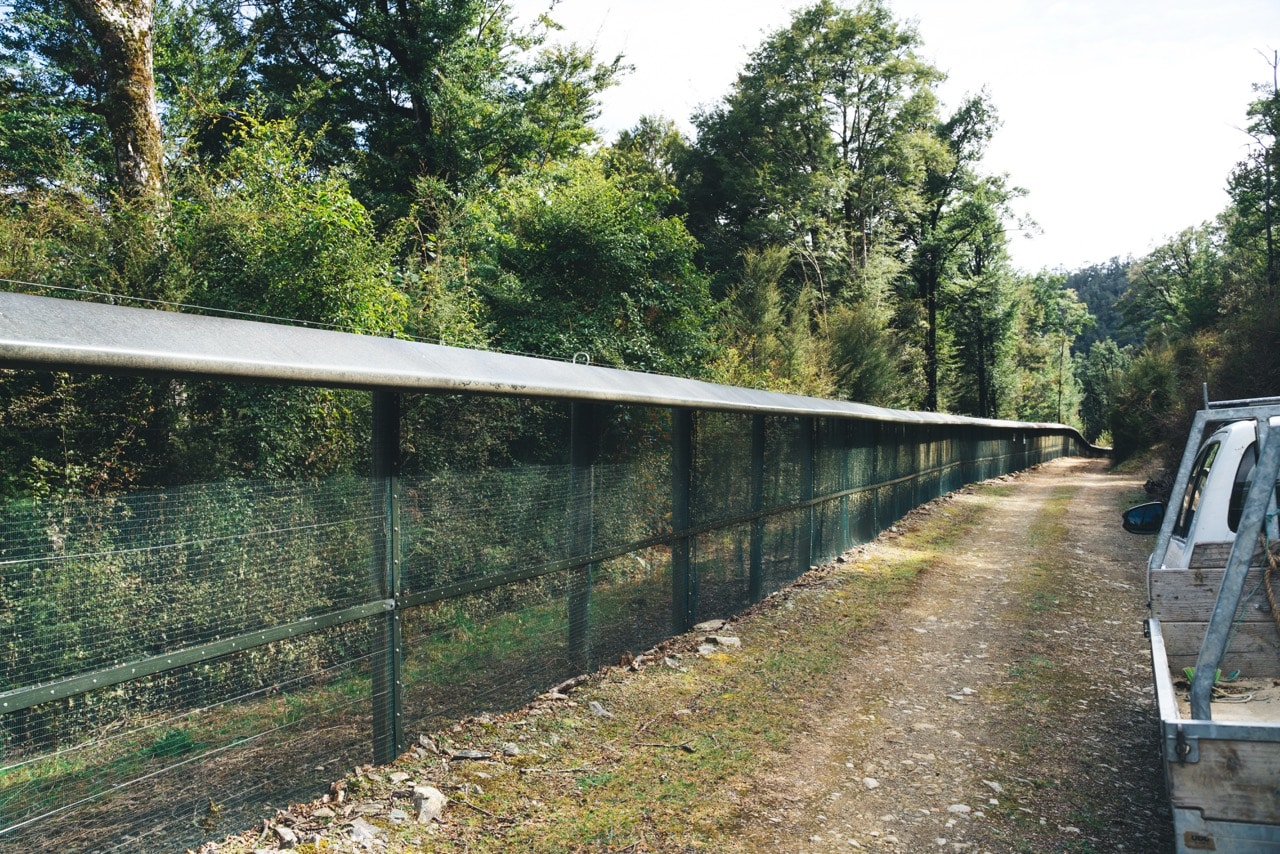
The Brook Waimārama Sanctuary currently relies on an EDAC system to monitor the 15 kilometre fenceline and perimeter gates. This system uses a 3G connection that is nearing end-of-life and is slated to be shut down early 2026. A replacement solution is needed to monitor the fenceline and provide alerts when gates are left open, trees fall, land slips, and rocks roll, utilising Reed switches for reliable detection.
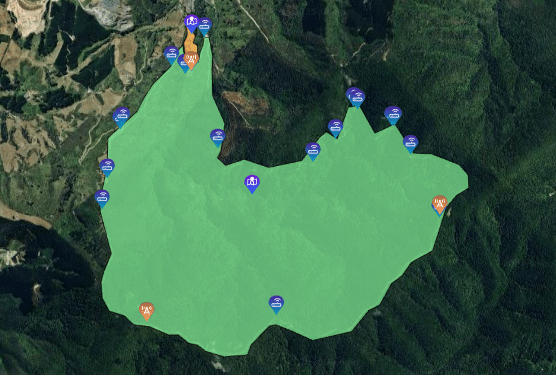
The sanctuary’s vast size and the valley’s poor cellular coverage posed major challenges. Its wraparound layout, with a large section tucked around a bend, made line-of-sight device installation virtually impossible.
The Solution
Teltrac Communications proposed installing a LoRaWAN (Long Range Wide Area Network) system — a network protocol for IoT — consisting of three gateways (shown above in orange). These gateways obtain network connectivity via either a field 4G SIM card or an Ethernet connection, and receive data from end devices: wireless and wired reed switches installed at pedestrian and water gates, along with wireless voltage meters deployed along the fenceline.
Key Elements
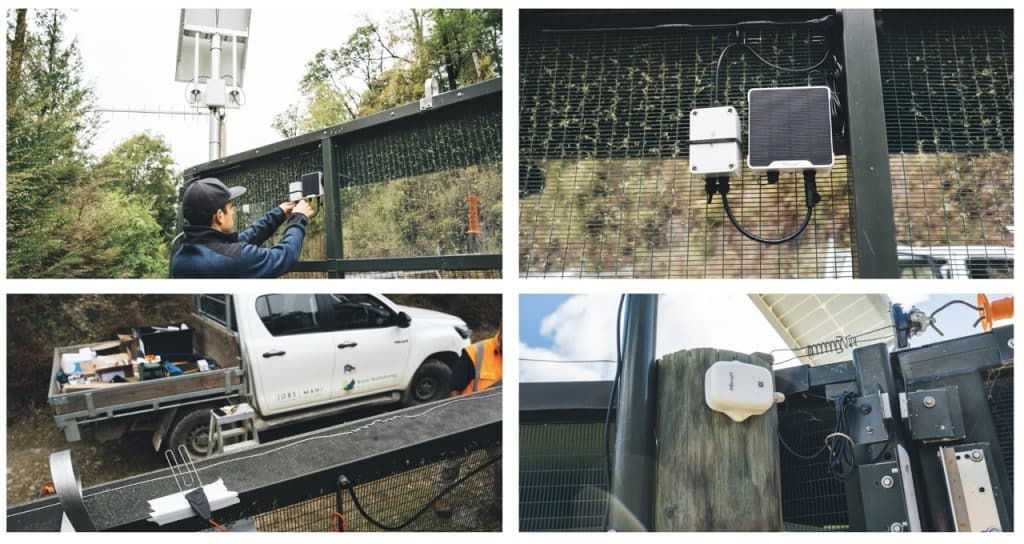
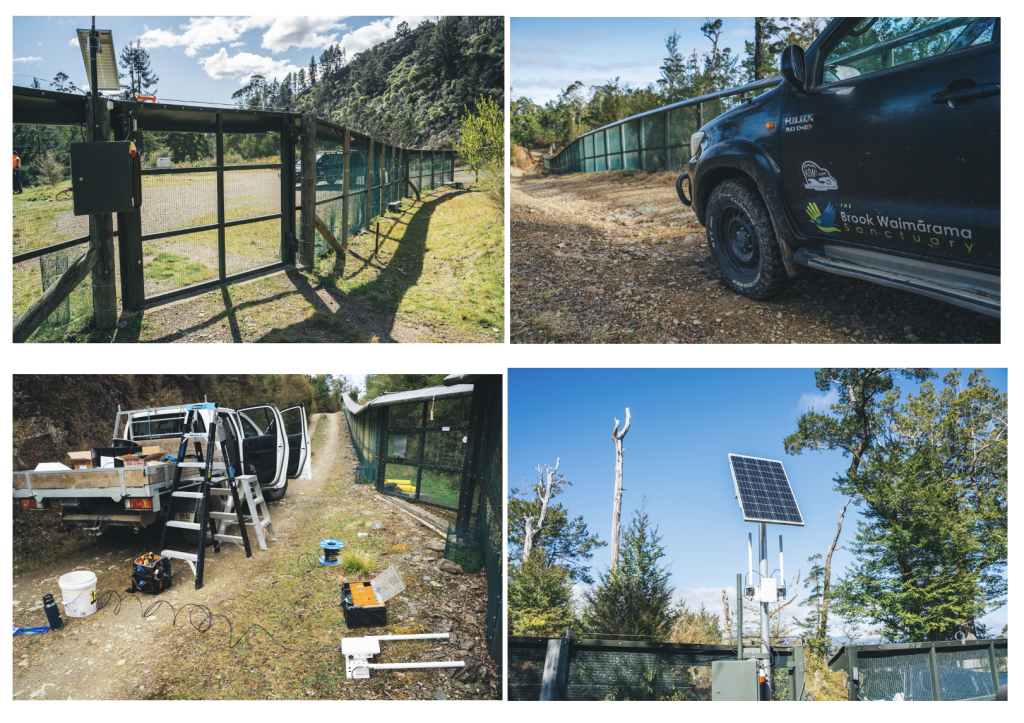
- 3× LoRaWAN Gateways installed (1× at the main entry powered by POE; 2× on the fenceline in the field, powered by a 12V battery connected to a solar panel)
- 11× wireless reed switches on various gates, connected over the LoRaWAN network
- 11× wired reed switches on various gates, connected over the LoRaWAN network
- 7× “Fency Boy” fence voltage meters connected over the LoRaWAN network, each monitoring a different section of the fence
- Access to the Scopius IoT dashboard for remote monitoring of battery levels, signal strength, and reed switch status
Why This Solution
- IoT connectivity spanning the entire sanctuary, provided by three strategically placed gateways communicating with all end devices
- A PC and mobile-friendly dashboard for real-time monitoring of fence voltages, short circuits, and the current status of gates and hatches along the fenceline
- Configurable phone alerts to notify users when end devices reach predefined conditions or thresholds
- A modular IoT platform designed for easy expansion — additional end devices such as weather stations, water level sensors, temperature and humidity sensors, occupancy sensors, and accelerometers can be added with ease
- Wireless reed switches with long-life batteries, suited to remote locations where power is unavailable
- Wired reed switches with an integrated solar panel to keep the battery topped up, with an optional 12V connection
Installation
Once the three gateways were in place, Teltrac began installing sensors on all gates, hatches, and water-gates. These end devices are wireless and battery-powered, sending a small packet of data every few minutes to any gateways within range. Power consumption is minimal — batteries are expected to last 3–5 years. All data is logged and collated, giving the sanctuary a clear view of the current and historical status of every device on the network.
Outcome
The sanctuary can now set up alarms to respond immediately to emergencies. With the previous system, staff received a single message indicating a problem with only an approximate location — requiring a ranger to physically investigate. With the new system, fence voltage for every section is visible in real time, making it far easier to distinguish false alarms and enabling better, faster decisions.
Although there were some early teething problems, the newer technology is performing well and opens many options for the future. IoT technology offers a vast range of devices — weather stations, water flow sensors, accelerometers, and more. Now that the backbone of the system is in place, adding new capabilities is straightforward.